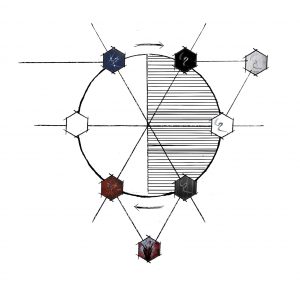
Below is a sketch of the first Lunatic Soul album in the project. If you haven’t read the introduction (which gives a brief explanation of why the project itself exists), you can read it here. Feel free to comment!
Lunatic Soul I
Released: Oct. 16, 2008
Colour: Black
My ranking: 3
Lunatic Soul I is an album jammed to overflowing with ideas, which is not surprising since they had been accumulating for years. Mariusz Duda had been collaborating with musician and friend Maciej Szelenbaum since before he joined Riverside and they had recorded a lot of material together. Some of these songs, as well as other pieces written after Riverside was established, had not been suitable for the band (in fact, there are several tracks on the Reality Dream albums that perhaps would not have been there had Lunatic Soul existed earlier). There were songs that Duda loved and was very eager to release, and a separate project was the only way he was going to be able to do it.
This long overdue summary is something I’ve been trying to accomplish for a couple of years now but somehow I couldn’t get the feel of it right. The format I used for the Riverside reviews didn’t really work for Lunatic Soul. So I’ll try it this way: I’ve written a brief biographical sketch of each album in order of release date, and included what I think makes it work, what doesn’t work, and how I rank it. I will post up these sketches over the next week or so. Once I set up my Substack they will appear there as well.
The rankings: this is not a matter of liking/disliking anything. I love all the albums but to somewhat different degrees, and for different reasons, which I have tried to explain. I expect I am in the minority for some of these, so if you agree or disagree, let me know!
First though–a (very) brief introduction to the project. A complete and detailed history of Lunatic Soul will be found in my upcoming biography of Mariusz Duda.
Walking on a Flashlight Beam turns ten years old on October 13, 2024. This album has a special place in my heart, and I want to explain why. It was the first Lunatic Soul album that was released after I became a fan, but that is certainly not the only reason or even the main one. Of course, what I’m about to say are my personal observations, and you may disagree with me–but you’d be wrong. 🙂
I’m not going to talk about the songs, so if you want to read about those, I have a full review here.
When Walking on a Flashlight Beam came out in 2014, it was almost immediately recognized as something very special in the Mariusz Duda discography by many reviewers and fans. It was the fourth Lunatic Soul release, a solo project which originally was supposed to consist of only two albums (Impressions is an instrumental supplement), but at some point, happily for us, Duda decided to keep the project going.
It was an album that was made during a very dark time in Duda’s life. Personal and emotional issues weighed on him; and when he first went into the studio, things didn’t go well. In order to recapture inspiration, he had to re-adjust his thinking and change the ideas, the approach, sounds and mood. Originally there were to be guest musicians, but he abandoned that idea: only Wawrzyniec Dramowicz remained on drums. There would be much less of the lush orientalism of the first three albums, and much more in the way of electronics. Shifting creative gears worked because this masterpiece came out of it. And it is a masterpiece.
There have been three subsequent Lunatic Soul albums in the decade since, so how does Walking on a Flashlight Beam hold up?
WoaFB is one of those albums in my collection that is of such importance that I cannot play it very often. I feel that when I do play it, I must give it my full attention, to honour it with nothing less than my entire listening presence. I own a few other albums like that, but not many.
For me, it is the most inspired, the most cohesive, the most nuanced, and indeed most intellectual of the entire Lunatic Soul project, and perhaps of Duda’s entire output.* After ten years it has lost none of its power; in fact it has gained stature as the other LS albums have been released. WoaFB reached a pinnacle in terms of flow, vision, and thematic integrity that the other albums did not quite achieve. In the wider context, it pulls the first albums (LS I, LS II, and Impressions) together, and provides an anchor point for the whole project. It is an album that is much greater than the sum of its parts.
There are LS albums that I play more often, that I consider “favourites”: the astonishing Lunatic Soul I; Impressions; and the joyous Through Shaded Woods; but I will state outright that by any objective measures, Walking on a Flashlight Beam is the best. It is a true showcase of Mariusz Duda’s creative powers, an album where all the elements–the music, the lyrics, the mood and atmosphere–came together in a perfect storm of inspiration.
*with the possible exception of “Transition II”, to which I have much the same response as WoaFB but this of course is not an album, and is a bit of an outlier in the LS canon.
There will be much more about this album in my upcoming book.
The past few months have been very slow on my blog–not, probably, that anyone has noticed, but still…I’ve let it slide. I have not been talking much about new music, because I haven’t been listening much to new music, and there is a reason for that: something else has taken precedence.
Here’s a bit of context:
A few years ago (well, more than a few, but let’s not talk about how quickly time is passing…), I started a series of posts in which I ranked and reviewed all of Riverside’s studio albums and EPs. I meant to do the same thing for Lunatic Soul but somehow it didn’t happen: this project is of such profound importance to me that I struggle to express how I feel about it. I have written reviews for all the LS albums from Walking On a Flashlight Beam to Through Shaded Woods, but I always felt at a loss when I tried to explain the whole project’s impact.
Then something entirely unexpected happened. I mean, completely out of the blue, I never saw it coming, never in a thousand years would it have occurred to me, all of that.
One day I responded to a text message, and in the middle of the conversation, the sender suddenly said: “You know what I think? One day you should write a book. About Riv/LS, maybe MD stuff. I can help you.”
Robert Szrednicki: guitars, keyboards, synths, various instruments
Guests:
Krzysztof Drabikowski; Inga Habiba; Lunatic Soul
Sebastian Aleksandrowicz; Anna Drabikowska; Michał Górczyński; Mariusz Kumala; Dyba Lach; Mariusz Mielczarek; Nadhir; Maria Oldak; Tomasz Popkrzywiński; Kamil Popławski; Mariusz Rodziewicz; Igor Szeligowski; Krzysztof Szmytke.
Track List:
Furta 9. Chors
Świętowit 10. Zachód
Wschód 11. Kupałą
Swaróg 12. Południe
Mokosz 13. Łada
Północ 14. Weles
Perun 15. Rozstaje
Trzygław 16. Rod
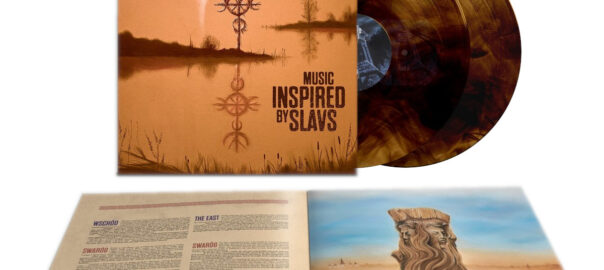
Music Inspired by Slavs is the fourth offering from the Music Inspired By… trio, who have intermittently been releasing largely instrumental thematic albums since about 1999. The last one, 2016’s Music Inspired by Alchemy, is reviewed here.
As the title suggests, the core inspiration for this album are the various deities of the Slavic pantheon. It is meant to be a musical imagining of a distant Slavic past, before conquest, science, and the imposition of a foreign religion, and the release is accompanied by lavish and detailed notes and artwork. There are eleven tracks related to the gods, organized somewhat geographically, interspersed with short, directional interludes to guide us. And so we pass through “Furta” (The Gate) into this lost world. Continue reading Album Review: Music Inspired by Slavs→
I discussed in Part 1 why I didn’t get to a lot of music this year; no point in going over it all again. My head was just not in a listening (as opposed to hearing) space for most of 2020. At any rate, my album list is very short, eight albums in total, and one of those isn’t even from 2020 (despite the title). Of course I heard way more than these albums, but they didn’t make enough of an impact to get included here. Might have been different, in a different year.
Except for the first one, the Album of the Year (because it is such a clear winner), I haven’t ranked/rated the rest except in terms of repeat plays, but they are all albums I play relatively frequently.
I remember the first movie soundtrack that had an impact on me, lingering long after I watched the movie. That soundtrack was Doctor Zhivago, and I was captivated by Maurice Jarre’s dark, orchestral take on old Slavic traditional music (and the pomp of Russian classical). The great choruses and rich folk melodies hit some deep spot in me that must have been there from the beginning. I was too young to understand it in terms of music appreciation, but it was the beginning, and eventually led to an abiding love of folk-rock.
Fast forward many decades….
I discovered Lunatic Soul. That music dug in more deeply than anything had before, finding a Lunatic Soul-shaped space inside me I didn’t even know was empty. The earlier albums (LS I, II, and Impressions) weren’t strictly folk-driven, but did have a rich, vaguely eastern feel that served much the same purpose. With the fourth album, the project shifted to something sparser, electronic, and song-driven rather than atmospheric, but even so, hints of that primal heart sneaked through.
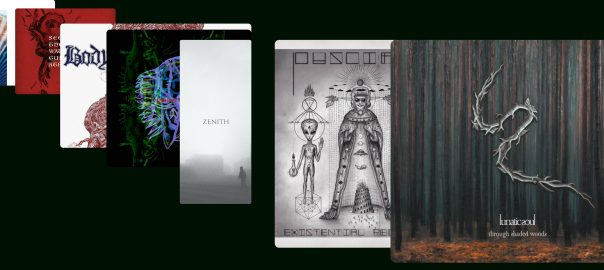
The seventh Lunatic Soul album, Through Shaded Woods, heralds a return to the acoustic folk-themed feel of the first three albums, but it follows a different path. The early albums tended towards ambience with some heavy moments worked in; but this album is pure joyous folk-rock. The eastern Slavic influence gives a weightiness to the the tracks that the music of the early LS albums did not possess. And there is no hesitation — right from the first note the album kicks into high gear, plugging straight into that ancient part of the brain that is connected to rhythm, pulse, and heartbeat. It is impossible for me to sit still while this album plays, and I mean that quite literally.
Lyrically, the album falls in with the story arc of the first two LS albums: death and rebirth, facing the past or losing it, and Duda does dip deliberately into the lyrical past with clear references to LS I and II. However, while the words evoke a yearning search for resolution, the music is for the most part hard, bright, and upbeat, driving the album along. It is an interesting contrast. There are monstrously heavy, distorted bass riffs, chants and shouts, layered acoustic guitar, thudding drumbeats (Mariusz plays everything on this album, including the drums), and of course Duda’s soaring vocals throughout (words and wordless). Not every track is a folk-rock juggernaut, of course, but the overall feel is one of chugging forward motion, right to the end. Which comes rather quickly, the album being a brief 39 minutes long.
Duda aimed (apparently) to have less eastern/oriental influences in this album than the others; however he didn’t completely escape them, as can clearly be heard in the title track. This is a song of the steppes, evocative of both the east and of dark Slavic folk. One can imagine the music the ancient travellers on the Silk Road must have heard as the sun dipped behind the cliffs and the caravanserai hove into view. The vocals are juddering and thickly distorted; spooky music indeed.
The star of this musical show though is the brilliant and compelling “Summoning Dance” — the longest track, and one that at times reaches almost ecstatic heights of pure rhythm and melody. This track demonstrates Duda’s masterful command of the style, and may have the most apt title of any: whoever does not respond to its call probably needs medical attention.
A feature of the later LS (and Riverside) albums has been a “wind-up” song — usually short, simple, and optimistic, even if not necessarily upbeat. While the core of “The Fountain” is a beautiful guitar/vocal/keyboard melody, it is so overpowered by the relentlessly swelling electronic strings and effects that the song itself struggles to survive under the weight of it all. It is distracting at best, and a bit of a disappointing end.
My reaction to this album is on two levels. On one hand, the melodies and rhythms are absolutely compelling, and I love them. They do the heart of this old folky some real good, and I play the record a lot. On an individual basis, these tracks hit me right where it counts.
However, one of my tests for an album is the resonance, so to speak, it leaves behind when it is over. The best albums feel bigger than they are: their effect lingers in the soul, and one does not want to play anything else until those echoes subside. I have to say that Through Shaded Woods doesn’t have that effect. The album, as a whole, feels insubstantial: not as much depth or meat as my favourite Lunatic Soul albums, and I think this is because the songs do not really connect together. There is no song-to-song continuum that carries the story along. This is very different from the three albums TSW is meant to follow. As well, for the first time for any of Duda’s shorter albums, it feels short. When it is over, I have fragments of songs playing in my head, bits of rhythm, but the main reaction is a sense of incompleteness: there should have been something more.
There is a bonus disc, which consists of three tracks including a 27-minute-long epic. “Vyraj” and “Hylophobia” sound like instrumental folk-rock outtakes — not bad songs by any means, and nice and danceable on their own, but it is clear why they didn’t make the main release.
Then there is “Transition II” — and it is hard to find words to describe this one. The closest I can come in the Mariusz Duda canon is probably “Eye of the Soundscape” from the album of the same name, but this is in spirit, not in sound. “Transition II” is a long, contemplative wander through the history of LS, with lots of references to past songs, reworked and linked together in a brilliantly-conceived and executed compendium of ideas that swirl around, lush and atmospheric one moment, spare and almost electronic the next. Impressions of Impressions, fragments of familiar themes, ideas and snippets on the edge of memory… This is the kind of track you need when you need something that is more than just aural wallpaper; an atmospheric soundscape that forms both a sonic backdrop, and rewards close listening. As far as I’m concerned it is right up there with the best of the genre: Tangerine Dream, Fripp and Eno, Bass Communion, early Mike Oldfield.
Apparently, there is one more Lunatic Soul album to come, one that will take its place on the “Life” side of the Circle of Life and Death, and I am very curious about how this album will wind things up. I say that because Through Shaded Woods has an air of finality about it; it very well could work as the last episode. But the plans have been laid out well in advance, and when that eighth album comes, it will spell the end of a remarkable musical journey.
An ambitious project, to be sure, and there is every chance that if I look back on it, say, in three years, I’ll probably disagree with myself, but at the moment, this is my list.
The albums I considered were the ones that I had already chosen in my yearly lists — most of them, anyway. Occasionally an album came along after the fact that I realized should have been included had I heard it at the right time. The chore was to figure out which of them were good enough to make The Final List. I began with about 45 albums, gleaned from my listening over the years — I had no set number I was aiming for, I just went year-by-year and chose what I considered to be the standouts from my list for that year. In the end, I narrowed it down to fifteen albums: some years were simply better for great music than others, and I see no reason to ignore that fact.
Of course, there is the obvious question: What makes an album good enough to be an album of the decade?? It is a question that is harder to answer than I anticipated, since I have to have criteria that includes perhaps some … unexpected entries.
It comes down to a couple of essential qualities. The first, naturally enough, is sheer staying power. It has to be an album that can stand up to repeat visits and retain the power and appeal that made it a favourite in the first place. There are lots of albums that grab me and make me play them a lot, but eventually I drift away, and whatever it was that drew me to them has gone.
The best albums continue to be able to hit all those same triggers that snagged me in the first place: that ineluctable rush of joy, the goosebumpy thrill, forcing me to pay attention. They manifest the transcendence of the best music to me, whatever idiosyncratic stimuli I require in order to consider an album something of lasting value. It’s difficult to explain why I feel that particular set of responses for any record, given the variety of genres these albums represent — obviously the oriental-folk syncretism of Lunatic Soul is very different from the pounding hard-rock of Pretty Maids — but albums from both those outfits are capable of transporting me.
I guess it comes down to this: whatever the music is, it must feel authentic. I am not attracted for very long to stuff that sounds forced, or derivative, or self-absorbed, or that emulates something else even with the best of intentions. The best music should feel natural, unselfconscious, emanating, as it were, from a place deep in the soul of the creators.
In terms of the artists who made the cut: certainly there are The Usual Suspects, the ones I tend to find consistently satisfying, but I am always prepared to be surprised, and I surely have been over the years. There are albums on this list that literally came out of nowhere. There are candidates from bands that I have found unlistenable at times; there are albums that are not consistently great — that have a few tracks I don’t play very much — but the overall impact of the album as a whole is much greater than the sum of its parts. I hope at least you will find the list interesting.
The Return of the Instrumental (and Poland Rising)
This was not one of my better years for musical discoveries. However, the past few years have been so good that I suppose the odds were against another, and it did not arrive. I only managed to come up with maybe 25 albums I wanted to listen to more than once, and some of those didn’t make it to a third play.
So: this year I have 15 albums in the list, like in other years, but I’ve decided to rank only the first five. The rest are in alphabetical order. Each of the final ten has its strong points, each its weaknesses, and any order I put them in would be largely arbitrary. Of the top five: I have to say only the first 2 albums are truly stellar, the third is definitely better than the rest, and 4 and 5 are strong enough to rank. You will find My Best Albums of the Year below the fold.
I would be remiss if I did not point out the fact that the three best albums (to my ears) for 2018 are all from Polish outfits. I’m pretty sure this is the first country sweep I’ve had. See more below….
Mariusz Duda: bass and acoustic guitars, piccolo bass, keyboards, percussion, programming, vocals
Wawrzyniec Dramowicz: drums
Tracklist:
He Av En
Trials
Sorrow
Under the Fragmented Sky
Shadows
Rinsing the Night
The Art of Repairing
Untamed
“And it’s going to be the best story of your life….”
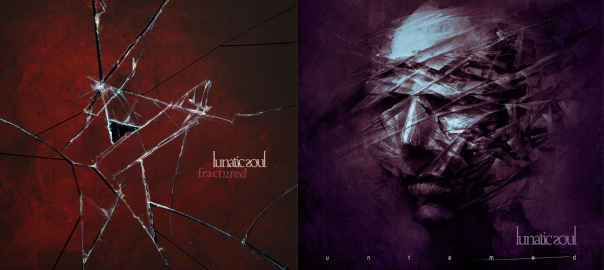
The tracks from this short album/EP/however you want to call it, were written during the Fractured sessions, but clearly did not fit that with album’s feel or direction. However, they were good enough (and I think recognizing how much of a departure from LS Fractured really was), that Mariusz Duda decided to gather them together into their own release.
In fact, I submit that Mariusz Duda had no choice but to release this album. Under the Fragmented Sky is an astonishing collection of music, so deeply evocative of everything Lunatic Soul as an idea stands for that I wonder whether LS really is an entity unto itself and Duda can only bow to its demands for life. I barely dared hope for something even half as good (especially after the disappointment of Fractured).
Or the tl:dr version of the previous paragraphs: Under the Fragmented Sky is a miracle.