Disclaimer: If you are reading this because you want insider details on recent events–sorry. No spoilers. Buy my book when it comes out.
Long Read Warning.
This post will be in three parts: the first, as the title says, is my particular journey with the best band in the world; the second is how I see their overall legacy; and the third is a commentary on the fate of the band and the reactions thereto. But read the disclaimer: I won’t be spilling too many beans.
Part I: Me and That Band
Not quite fifteen years ago I stuck a prog compilation CD into my player, and hit ⊳. A bunch of songs happened. “Meh,” I thought to myself.
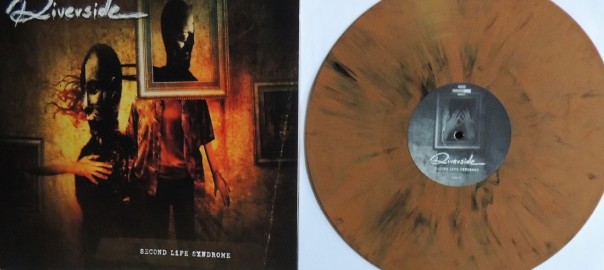
Eventually, a ballad came along, by a band I knew nothing about. It was song no. 9: Riverside – Conceiving You (from Second Life Syndrome) the credits said. It turned out to be the best piece by far on that entire CD, blowing away offerings from Marillion and Transatlantic and The Flower Kings and a bunch of others. Down the rabbit hole I went, and within a very few days I knew I had discovered something extraordinary. That song would change my life in ways I could not imagine.
The time has come for me to add The World Under Unsun to my evaluations of the Lunatic Soul albums; many months have passed since I first started listening, and I think I can now put it into context. The Circle of Life and Death is closed; if there are any new LS albums (and I think there will be) they will be the start of something different (dare I say…beautiful??).
The introduction to this series of posts is here; you can follow the arrows at the bottom of each post to find the rest (or just use the search function).
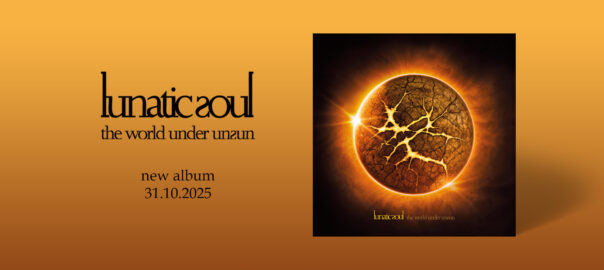
The World Under Unsun
Released: October 31, 2025
Colour: Gold
Ranking: 4
I’ve written a long and detailed review of TWUU which you can find here. It’s been a few months since I wrote it, but what I said then still stands.
The World Under Unsun is a monumental album in more than just length: it showcases Mariusz Duda’s conceptual skills in a way found in none of the rest of his discography. He didn’t just write songs, he gathered and curated ideas that span the entire Lunatic Soul project, incorporating familiar themes, repeated tropes, references to and glimpses of past albums, creating a masterful summary of the entire 8-album cycle in 14 remarkable tracks.
It was a difficult album for him to make, for a variety of reasons. Riverside seemed to be eternally on tour: their 20th Anniversary trek around the world followed by the writing and recording of the band’s eighth album followed by that tour…it was hard for him to find time to work on the new album. There were other issues as well, but the result was a five-year gap between TWUU and the album before, the longest in LS release history.
Musically, the album is spectacular: dense, dark and richly textural, sweepingly atmospheric but with plenty of Mariusz’s signature heavy bass riffs. There is no lack of melody nor beautiful ballads; and familiar trance and oriental themes trace their way throughout the album. It is Lunatic Soul writ large.
For me though, the lyrics carry special weight. In terms of the story arc, the protagonist has “crossed this bridge” (see “The Fountain” in Through Shaded Woods) for the final time, to wind up the remarkable narrative cycle of the whole project, and we see direct links to earlier albums in the lyrics of several tracks (“The Prophecy”, “Loop of Fate”, “Confession” for example). However, there are layers of meaning here (as there often are with Mariusz’s lyrics), words that delve into deep, dark places of the soul, some very powerful and painful to read. He has stated before that lyric-writing is a form of therapy for him, and these words are as profoundly therapeutic as anything he’s ever penned.
Upside: An imposing album and a grand summation of the whole project. There are songs of immense power, of delicate beauty, of deep reflection; and every one moving the album forward. It feels much shorter than its 90-minute length.
Downside: There is an unrelieved darkness about TWUU, overall a dearth of emotional variety compared to other albums in the project; this is the only aspect where its length may tell against it. And speaking personally: I find that Mariusz’s vocals are too deep in the mix. This is unfortunate because he’s done some spectacular singing and it would have been nice to fully hear him.
Addendum
The addition of TWUU means that all the albums below shift down by one from their original positions. That is:
Album Original RankRevised Rank
Impressions 1 1
Walking on a Flashlight Beam 2 2
Lunatic Soul I 3 3
The World Under Unsun — 4
Through Shaded Woods 4 5
Under the Fragmented Sky 5 6
Lunatic Soul II 6 7
Fractured 7 8
I also need to clarify something: In my post on Walking on a Flashlight Beam I called the album the best Lunatic Soul of all, and yet my rank is #2. Why not #1? Because Impressions is my sentimental favourite, the LS album that dug in most deeply during those early days of discovery. I love it but It is not the best LS, not the masterpiece. That is indeed Walking on a Flashlight Beam.
Here are the albums that, for me, truly succeeded in what they were aiming to do, whatever that was: evocation of pure mood and atmosphere, winding up a remarkable multi-album psychological journey, being cheerfully upbeat, distilling the chaos of current times into a few powerful ideas, or simply existing despite all odds. Albums that are compelling, evocative, astonishing, and/or just plain enjoyable.
Everyone who knows me and is familiar with my reviews (and my current ongoing biography) were probably pretty sure what I’d choose for top spot, and they were indeed correct—but it was no runaway romp. It took a lot of thought, and the gap between No. 1 and No. 2 is very small indeed.
I’ve briefly discussed a few of the albums that follow at earlier points in the year, but now is the time to gather up those releases as well as the music that has appeared since, and pull it all together into one grand summary.
Alas, this year I barely had time for music exploration: I was heavily engaged in completing the first major draft of the biographyI’m writing, so that I could get it out to my beta-readers. I couldn’t dive deeply into the music pile until September. As a result, my “long list” is even shorter than it usually is, and I’m later than usual because I’ve had to spend a lot of time catching up. My personal Rule For Reviewing is not to comment on an album until I’ve listened at least half-a-dozen times, and a couple of the albums I wanted to include (or at least consider) were released pretty late in the year.
Genre-wise: metal and post-metal (quite a bit of that, actually—I am fond of the heavy stuff), rock, prog, industrial, ambient, post-punk, and some other things that don’t really fall under any specific genre but are probably closer to prog if you have to put them somewhere.
So…yeah, what follows is what stuck with me in 2025. I’ve whittled a potential list of about 25 albums down to 15, and I’ve gone with that number (instead of, say, 10) because I liked a lot of what I heard. Still, there were a handful I couldn’t quite squeeze in, but hey, you can’t include everything (however, I’ve seen a couple of lists on Substack that apparently did try to include everything. Come on, 100-Albums-of-The-Year guy—nobody has that kind of time!).
I will split this into two parts, posted separately: Part 1: the bottom ten albums plus a look ahead, and Part 2: the Top 5, with their longer summaries.
I’ve gotten terribly behind in my music updates: the last one was written back in March; meanwhile, the new music keeps on coming. In my defense I’ve been busy with the biography, and while I have indeed heard new stuff, I haven’t been able to spend a lot of time with it, let alone write about it. However, the last few weeks have found me in between authorial sessions, so I’ve had the chance to get caught up on the backlog. With the exception of two albums (Kauan’s Wayhome out November 7 and Seeming’s The World in December) everything has been released. Yes, the new Lunatic Soul is still a couple weeks away for you plebeians, but I’ve had it for a while. Of course the year isn’t over yet; there could be more out there.
On October 31, 2005, a little-known progressive rock band from Poland released their second album. It was not a record that would ever sell a million copies nor would the band ever attain stadium-level fame (it was modern prog, after all…); nevertheless, their first album, released two years earlier, had caused a stir in the niche world of prog due to its fresh and original sound, and people were eager to see if this relatively new outfit could live up to that initial promise.
This is the last of the current Lunatic Soul releases I have summarized. The eighth album is due to be released later this year, and of course I will review it when I get the opportunity.
Thank you for reading this series of posts. If you have not, you can start at the beginning here, and work your way along by following the arrows at the bottom of each post. Feel free to browse the rest of the site—there are lots of reviews!
Through Shaded Woods
Released: Nov. 13, 2020
Colour: Dark green
My ranking: 4
Through Shaded Woods joined Lunatic Soul I, LS II, and Impressions on the side of Death in the Circle of Life and Death, the first album to do so since 2011. It was intended, somewhat ironically, to embrace life and light–and boy did it ever do that. Musically, it was closer in essence to the first two Lunatic Soul albums, but there is much less ambience and trance. The sparse and jagged sounds of the previous three albums were also gone. TSW deeply celebrates traditional Slavic folk and ancient rhythms brought into modern times: the album is pure folk-rock exuberance run through Mariusz Duda’s prog filter.
It is a much more acoustic album, but it is not a delicate album by any means, with plenty of riff-driven heaviness compliments of the piccolo bass which is used extensively throughout. “Navvie” has to be one of the most kick-ass opening tracks in Duda’s entire discography, and the rest of the album lives up to it, at least until the last song (more on that below). The enthusiasm is infectious–it makes you want to dance, even through the two spectacular proggy epics, “Summoning Dance” (which completely lives up to its name) and “The Passage,” featuring one of Duda’s heaviest riffs. The album is unique in that there are no guests at all: Mariusz plays everything including the drums.
Lyrically, we pick up on the Hero’s journey after he was left to wander at the end of Lunatic Soul II, lost in limbo as he begs for another chance at a new life. He kept his memories to be sure, but these included recollections he’s found he’d rather not carry with him. He is desperate for the opportunity to choose again. However, we do not follow the actions of the protagonist in any detail–we are still deep in his psychology, his desires, regrets, and yearnings, coming to terms with his past. This of course reflects how Duda himself shifted his lyric approach to the project in the years between 2010 (when theoretically it had ended) and 2014 when he returned to it. The inner world of the protagonist takes on much more importance because the lyrics began to reflect the events and issues in Duda’s own life at the time he wrote the albums.
Upside: Exhilaration and sheer unadulterated joy suffuse this album; when Mariusz is having fun, you can surely hear it. Also, the 27-minute long instrumental bonus track “Transition II” is an absolute phenomenon of long-form atmospheric writing on his part. TSW (along with Fractured) has probably done the most to introduce Lunatic Soul to the Riverside fanbase who hadn’t paid much attention to it, as well as to a wider prog community, and it is easy to see why.
Downsides: a couple, which stand out because the album is, in general, spectacularly good. First, the last song, “The Fountain”–yes I know how beloved it is–is overdone. All those swelling strings…alas I find drags the overall feeling down some. Second, handling the drums himself. Mariusz is a competent drummer, and I know why he chose to do it himself, but there are times when a song or two demands more than competence. I love the album but I miss Dramowicz’s presence.
Colour: Violet–it is also the only album without the “ls” logo in any form.
My ranking: 5
Generally when an album is made, not everything written will make it onto the finished product. This was true for Fractured: some of the music Duda created did not fit that album’s theme and mood. However, there were some very powerful pieces that were left over, songs that begged for release, and so he decided to complete them and make a kind of “companion album” to Fractured. The result was Under the Fragmented Sky, and the two albums could not be more starkly different. UtFS is bright, forward-looking, almost upbeat–there is still an undercurrent of anxiety but you can feel the struggle to overcome it. It is also very strongly electronic–in some ways it is a precursor to the electronica project that became Duda’s fourth “musical world” in 2020.
It is mostly instrumental, sparse and powerfully melodic; lyrically it is closer to the Lunatic Soul story than anything on Fractured. Interestingly it seems to be in two parts: the first half is open and more acoustic, the second becomes darker, more electronic-driven, yet somehow it all hangs together. It is difficult to believe that the songs came out of the same sessions that produced Fractured. The album ends with the brilliant “Untamed”–the “wind-up” song is not perhaps Duda’s strongest skill, but “Untamed” is one of his best and a just plain great track. It doesn’t hurt that it is anchored by Dramowicz’s spectacular drumming, the only song on the album on which he appears.
It was at this time, just before UtFS was released, that Mariusz revealed something else: The Circle of Life and Death, a graphic that illustrated the relationships that each of the Lunatic Soul albums was to have with each other. He had first thought of the idea with WoaFB; when it became clear that the project was going to continue he needed to plan out the rest of the releases. Since the overall theme was life, choices, and rebirth into a new reality, the albums would follow a cycle, ever repeating. The Side of Death was where the original project began, with LS I, II, and Impressions (as a side branch); the Side of Life held WoaFB, Fractured, and UtFS as a supplement. The music also had different characteristics for each side of the Cycle.
Upside: Bright, electronic and quite experimental at times, and yet much closer in feel to Lunatic Soul than Fractured is. Brief, laser-beam focused and miraculously cohesive, the album has the “flow” (even Duda admits this to be true) that Fractured did not quite achieve.
Downside: it is difficult to place this in the Lunatic Soul narrative sequence, since the lyrics are not like those on Fractured. So far it is a “supplement” in the way Impressions is, but it is not equivalent to Impressions: you can’t just ignore the words.
If you have not read the other entries in this series, you can use the links at the bottom of this post. The Introduction to the whole set is here.
Fractured
Released: Oct. 6, 2017
Colour: Dark red
My ranking: 7
If WoaFB arose from a depression rooted in personal events and difficulties, Fractured was the result of tragedy on an entirely different scale. The ‘ls’ logo on the cover is so deliberately splintered to be almost unrecognisable.
This was–and probably remains–the most deeply autobiographical of all of Mariusz Duda’s work. It was the spring of 2016, and he was almost destroyed by the sudden death of Piotr Grudziński, Riverside’s guitarist and his closest friend, followed three months later by the sudden death of his father. One of the ways he kept his sanity in the dark months that followed was to work–and for Duda, “work” was creating music. Fractured is an album of words, a story of the struggle to regain the light. There is only one short instrumental track; all the rest of the songs give a disconcertingly intimate look at a man determined to get himself back on track and shake off–with variable success–the overwhelming grief and pain of profound loss. At first he considered releasing it under his own name, MD, but ultimately chose to situate it as a Lunatic Soul album, a prequel to Walking on a Flashlight Beam.
Musically the album also departs: the lush atmospheric washes of the previous albums are almost entirely absent, replaced by a sound that is stark, open, ragged, with lots of acoustic guitar, sparse electronic accents, and even an orchestra. Most importantly though, we are introduced to something brand new: the sound of the piccolo bass. This is not a modified bass but a bespoke instrument, created by Mariusz’s Polish luthier especially for him, and it has proved to be a game-changer. It allows him to play in his beloved higher registers and create heavy, buzzy sounds somewhere between bass and guitar without violating his promise to never use electric guitar in the project. This instrument has taken on a significant role in the sound of both Lunatic Soul and Riverside, and it may well be unique in prog.
Upside: Fractured introduced many Riverside fans to Lunatic Soul, and it is among the most popular of the LS releases. It is a beautifully conceived, deeply emotional album and I can fully understand how so many fans engage with it, both musically and especially lyrically. One of my favourite songs across Mariusz Duda’s entire output is “Anymore”, a heartbreakingly intimate glimpse into a family relationship.
Downside: However…I must admit that this is not my favourite Lunatic Soul album, and that is because it does not feel like a Lunatic Soul album to me. The Hero and the author have become inextricably intertwined with each other: it is so clearly about Duda himself that the connection to the original protagonist is lost. It is an album that works in isolation, but not so much as part of the project.