I’ve briefly discussed a few of the albums that follow at earlier points in the year, but now is the time to gather up those releases as well as the music that has appeared since, and pull it all together into one grand summary.
Alas, this year I barely had time for music exploration: I was heavily engaged in completing the first major draft of the biographyI’m writing, so that I could get it out to my beta-readers. I couldn’t dive deeply into the music pile until September. As a result, my “long list” is even shorter than it usually is, and I’m later than usual because I’ve had to spend a lot of time catching up. My personal Rule For Reviewing is not to comment on an album until I’ve listened at least half-a-dozen times, and a couple of the albums I wanted to include (or at least consider) were released pretty late in the year.
Genre-wise: metal and post-metal (quite a bit of that, actually—I am fond of the heavy stuff), rock, prog, industrial, ambient, post-punk, and some other things that don’t really fall under any specific genre but are probably closer to prog if you have to put them somewhere.
So…yeah, what follows is what stuck with me in 2025. I’ve whittled a potential list of about 25 albums down to 15, and I’ve gone with that number (instead of, say, 10) because I liked a lot of what I heard. Still, there were a handful I couldn’t quite squeeze in, but hey, you can’t include everything (however, I’ve seen a couple of lists on Substack that apparently did try to include everything. Come on, 100-Albums-of-The-Year guy—nobody has that kind of time!).
I will split this into two parts, posted separately: Part 1: the bottom ten albums plus a look ahead, and Part 2: the Top 5, with their longer summaries.
Every year I complain that I didn’t really listen to as much music as I wanted to, and every year I manage to scrape together some sort of list of music that I did listen to. This year was not different except that I was even more distracted than usual for most of the year and I often found that I was not in the mood, or did not have the opportunity to really explore new music. Work and some personal matters were kicking my ass, and when I was in the proper headspace a much more important project took my focus. Somehow though I ended up with a long list of about two dozen albums, so I guess it wasn’t as bad as I thought.
However, I have to say that I found this year’s crop of releases less than compelling. Nothing really blows me away. This is not to say that there aren’t good albums on the list, but overall The Year in Music feels a bit underwhelming. However, it is also The Year of the Vocalist: man, there are some great singers on some of these albums! Manuel Gagneux, Yann Ligner, Patryk Zwoliński… you guys killed it.
In terms of genres: 2024 has made up for last year’s dearth of metal. I heard quite a bit of it this year, along with prog and prog-related, industrial, and some art-rock. There was no Steven Wilson this year, so no pop. (/jk)
I have nine solid contenders, and if I had to pick one more to make it an even 10… well, there are four leftovers of roughly equal merit so I might say something about those, too. I’m still not real sure about the order though, or which album I would make “Number 1”. There are two or three that could take that spot.
It is that time once again, when I gather together the music that I have liked over the past year, and give a brief explanation of why I like it.
This year feels like a good year, and that is because most of the albums I’ve included feel like they may just stick around longer than the time it took to get to know them well enough to talk about them. Other of my year-end lists do include entries that never made much impact beyond the listening and inclusion; as much as I thought I liked them at the time, they ultimately made no lasting impression, which is not what I hope for. This year, either the albums are better, or I have made more of an effort to exclude the ones that might be short-lived. Or both. Still, there are a handful at the bottom end of this year’s list that are unlikely to be long-term players, but that do have some good songs, so hopefully I will continue to sample them.
There are fourteen albums here that represent a relatively narrow set of genres compared to other years. There is a fair amount of prog, or at least a fair amount of music from bands with a proggy reputation, which might be a bit of a surprise if you know me. I do not consider myself a fan of modern prog and do not seek it out, mostly because I find the vast majority of it tedious and entirely predictable. However, there are a handful of bands who fall under that (admittedly rather broad) umbrella who can manage to sound fresh, so I can’t write the genre off completely. A few of them released pretty good albums this year. There is some industrial/industrial-related, some post-rock, and straight-up rock. No metal or post-metal this year, and no oddball genres.
In terms of the ranking… I’ve put numbers on them but except for the three or four at the bottom, those numbers don’t mean very much. It’s crowded at the top. There are some clear distinctions among some albums, but there are also places where making a choice is largely arbitrary.
It’s a few months and releases later from the March overview, so let’s see what is going on and how the new stuff stacks up. I’ll also take a look at some upcoming albums. You can see what I reviewed earlier in the year, here.
It’s that time again, when, along with many other people, I maunder on about some music I heard in the past year. I’m not sure how many albums I did hear altogether, definitely more than the dozen I talk about, but I don’t make notes unless for some reason the album gets my attention long enough to play it more than once. A lot of albums don’t get that far. A lot of albums I don’t manage to get all the way through even once. I’m sure there is a lot of music that I have missed — there always is, mostly due to time constraints, and mood constraints, and the inability to listen to everything that gets recommended by various friends, musicians, and algorithms, but I do try.
Anyway, what follows is the music that did catch my attention sufficiently for me to revisit it. I think there is less variety than usual: metal and post-metal dominate, but there is a surprising amount of prog considering my general disdain for the modern form of the genre, some ambient/electronica, and a bluegrass album. I’d heard of every band on the list except for one, and that one proved to be one of the best discoveries for a long time. I found a couple of albums simply because it struck me that the band had been awfully quiet lately and maybe I should check what they were up to.
In terms of ranking… I’m beginning to wonder whether I should bother: at least, for anything not in the Top 3. I did a little research, looking back on my previous lists to see what albums had actually stood the test of time. It wasn’t quite as bad as I feared: for most years, a lot of my top picks have turned out to be albums that I still play. Not all years to be sure, and not all albums, but enough for me to continue to trust my own judgment. So take the top 3 as the top 3, and the rest in more or less rough order, as in — the ones near the bottom are less interesting than the ones near the top.
“A book read by a thousand people is a thousand different books.”
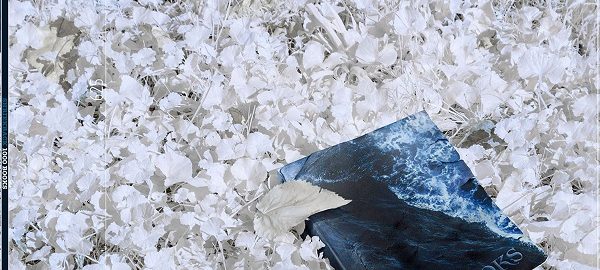
Sometimes you hear an album and you like it right from the get-go, and you always like it but it never really gets under the skin. Sometimes you hear an album and you think it’s great, but after a while the urge to hear it disappears and never really returns. And sometimes you hear an album and you think … well, that’s okay. But something makes you return to it. And return to it. And then you realize — this is great, in that sneaky, deep-down long-lasting way, an album you know is not going to wear out its welcome. Such is 1000 Books.
I had been a huge fan of Shriekback back in the day, their Jam Science and Oil and Gold albums being among my very favourite things from the 80s. They had some hits, too: “My Spine is the Bassline”, “All Lined Up” – classic 80s club tracks, as good as anything from back then. But after a while I stopped paying attention even though they had (in one form or another) been sporadically releasing albums over the years. They reappeared on my radar around 2015 with the album Without Real String or Fish (reduced from a quartet to a trio) which I liked well enough to encourage me to continue watching them and buying the (mostly crowd-funded) albums since.
1000 Books is their 16th album, and it hits on all cylinders. More than any of the other albums over the past few years (for me, anyway), it evokes most strongly the Shrieks of the 80s, in their heyday: that dark new-wave funkiness, bass-heavy and smart as hell (with some of the tastiest drumming I’ve heard in years), updated to the new century with a deep maturity.
There is not a weak song on this album. Starting with the electronic smoothness of “Space in the Blues” with its eerie winding background guitar solo, through the funk of “Unholiness”, to the contemplative distorted lament of “Wild World” we are taken on an immersive, thought-provoking journey, and the production is absolutely outstanding, probably the best I’ve heard for years.
But more than this. One of the outstanding features of the band has always been the arcane, allusive, and hugely literate lyrics, words that can stand on their own but are actually there in service to the music. A band can count itself lucky if it has one decent lyricist — Shriekback, remarkably, have two: both Carl Marsh and Barry Andrews write lyrics, with equal facility, and the album retains a consistency of vision and feel even though the lyricists are different song to song. They are among the best in the business. (They also share the the vocal job between them).
1000 Books came along very late in the year, and in fact the actual release to the general public did not happen until January 2022 (although originally meant to happen before
the end of the year), which technically makes it the first new album of 2022 — but to hell with it. This album is SO good that it takes the top spot for 2021. Maybe it will do the same for 2022.
You can preview the album on the band’s music page:
This past year was an excellent year for music, much better than the travesty that was 2020. Right from the beginning with the early releases it promised to be a strong one, and quality-wise it never really let up. The music did come along in fits and starts: a bunch of late winter/spring releases, a bit of a lull through summer into the fall, and then a final surge very late in the year. It was this last bit that proved problematic, because the late releases were so strong they threw off all the calculations I had made up to that point. By mid December I had to completely rethink my top-tier albums.
In terms of genres, what attracted me is largely divided between various forms of instrumental ambient electronica or industrial, and good ol’ rock‘n’roll/metal. A bit of proggish and alternativey stuff is sprinkled throughout, but not too much. There were certainly surprises along the way. I ended up with an even dozen albums that stand out; I think this is the strongest year for music in a while.
Gary Numan released his crowd-funded album early in the year, and Shriekback did the same thing in December. Industrial legend Bill Leeb gave us two offerings: one from Front Line Assembly and another from the long-quiescent Noise Unit. Mariusz Duda, who has an inordinate fondness for trilogies, also released two albums to complete his latest, which was begun in 2020 with Lockdown Spaces. The Tea Party emerged almost out of nowhere to demonstrate that they are still very much alive and a force to be reckoned with. The long-awaited new album from post-metal masters Tacoma Narrows Bridge Disaster finally appeared.
It isn’t really fair to compare this year to 2020 — that year the world changed so fundamentally, affecting all aspects of our lives, that it is probably best left as an anomaly. There were so few albums that really caught my attention, it was almost musically a non-existent year. I know there were good albums, and a couple of them were even very good, but honestly I didn’t have the desire to explore.
However, I am pleased to announce that I’m ready to start digging in again, and 2021 is shaping up to be much more interesting. It is certainly a much heavier year — out of the 8 albums I’ve spent time with (7 of which are mentioned here; one will be reviewed shortly), four of them are flat-out headbangers, or at least in that territory. The others cover industrial, post-metal, electronica, and pop. Soon-to-released stuff is also going to be at the heavy end of the musical spectrum.
So let’s get started. The order is more-or-less by release date:
Frontline Assembly: Mechanical Soul
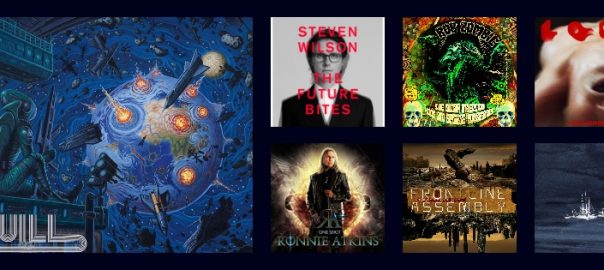
2021 marks 35 years of industrial/EBM legends Frontline Assembly, and January saw the release of Mechanical Soul. This is an album of dark synths, distortion and huge dense industrial noise, post-apocalyptic in theme, maybe heavier than 2017’s Wake Up the Coma, with Leeb’s heavily processed vocals emphasizing the cold, distant feel. There are ten original songs and one remix. The album starts well: the first three tracks charge along, featuring relentless beats and throbbing synth, pausing for the somewhat more contemplative “New World”, but by track 7 it is clear that Mechanical Soul has lost momentum and isn’t going to get it back. The tracks become somewhat conventional and not particularly interesting. However, “Barbarians” is a bit of an attention-getter, a slow drum-based buildup into a thick sweeping chorus, with a strange, highly-mannered vocal delivery. I like it. The album ends with a remix of “Hatevol” from Wake Up the Coma. The overall feel, unfortunately, is of an album that doesn’t really seem to go anywhere.
Steven Wilson: The Future Bites
At this point the fact that Steven Wilson is a pop musician should come as a surprise to no-one save the most recalcitrant of old Porcupine Tree fans. His last few solo albums have been moving rather slowly away from his prog roots, throwing in pop songs amongst the more familiar proggy stuff, but with The Future Bites he has made almost a complete break. Wilson digs into 70s-era disco, funk, and pop to craft his purest evocation of these ideas yet. And frankly, he has done an excellent job of it — there is no denying his abilities as a deeply-experienced craftsman. The main release is a straightforward 9 songs and just over 40 minutes long, not an album with much room for epics or for showcasing guest-musician chops, but this is not an album that aims to do that anyway. Almost all the songs are on point, relatively short, with the exception of the overlong and self-indulgent “Personal Shopper”. Well, nothing’s perfect. The highlight of the album (for me) is the superb “12 Things I Forgot”; if Wilson was trying to create a great pop song, he nailed it.
However, as musically divergent as this album is from the past ones, I don’t find it has much changed in terms of the overall impression it leaves. He is still playing it very safe: there is nothing particularly adventurous here, nothing to grab the attention, nothing deeper than the catchy tunes and great production.
Thematically, the album was styled as an ironical (if not cynical) examination of modern online consumer culture and behaviour, and it was hyped with singles, B-sides, box sets and extras, some things being released over the weeks before the official album hit. The fan base did not disappoint, jumping all over it. I have never really been a fan of Steven Wilson the lyricist, not finding much challenge in anything he has written, but the songs here are even more simplistic than usual: the message of the album was demonstrated far more effectively by the fans themselves than anything Wilson wrote. Maybe that was the point.
Ronnie Atkins: One Shot
The Nordic veteran of melodic hard rock and charismatic front man for the venerable Danish hard-rock/metal band Pretty Maids has released his first solo album. It is everything one would expect with that musical legacy: solid heavy rock, polished and professional, showcasing his 35+ years songwriting and performing experience. Atkins is joined by old friend and current PM member Chris Laney as producer, and several guest musicians including former PM members Alan Sorensen on drums and Morten Sandager on keys.
Atkins blasts his way through 11 heavy-duty tracks, his voice sounding as dense and powerful as always, and as always the songs are stuffed with hooky melodies and riffs, and catchy lyric turns of phrase. It does cover most of the expected styles — from heavy rockers to more sedate ballads; my favourite tracks are probably “Scorpio”, and “Before the Rise of an Empire”, monster songs reminiscent of the thunderous hard-rock of Pretty Maids.
One does want to love this album. Ronnie Atkins has struggled with lung cancer, being diagnosed with it, treated for it, declared free of it, and then diagnosed again in Stage 4, all in less than two years. It is hard to imagine the kind of emotional and psychological toll that must have taken. It is also understandable that he would need to do something that may be his last chance for anything music-related. Between the pandemic and the cancer, Pretty Maids have been unable to tour their last album (released in late 2019), and as much as one hates to say it, it is unlikely they ever will.
It is a very good album. Alas, it is not a great album. It is hard to fault it: polished and accomplished, it achieves exactly what it aims to do, but I think it gets in its own way with its sheer earnestness and sincerity, and some of the tracks have a slightly rushed feel to them. However, given that this may well be the last chance Atkins gets to express these ideas and say what he needs to, it is a minor complaint.
The Horrors: Lout
A satisfyingly heavy industrial metal effort from some guys I’d never heard of before, who have released a short EP of three tracks. This is a departure from the rather smoother, shoegazey sound of the previous album, even though hints of this direction are in there. If you like the thundering machine metal of Author and Punisher, or the rougher end of 3Teeth, you’ll probably like this. At just over 11 minutes long it is more of a teaser than even an EP, but I’m definitely interested enough to watch for a full-length effort if one is forthcoming.
Rob Zombie: The Lunar Insertion Kool Aid Eclipse Conspiracy
Well, Rob Zombie. I suppose it was inevitable that at some point one of his solo albums and I would cross paths. I’ve managed to avoid his movies so far, not really being much of a horror fan, but I’ve not actively avoided his music — I just hadn’t come across any by accident. At least until Spotify, when a track from this album appeared in the Release Radar list, and I tried it, and found it interesting enough to flag for follow-up.
It is a good album. Heavy and well-written, pulling from all over the rock past from what I can hear — working in funky bits and jazzy bits and country bits and bluesy bits and plain old classic rock n roll bits, but it is not a pastiche. His band is guys who’ve been with him for ten to fifteen years, and you can hear the cohesion. The arrangements are tight, the tracks varied (and relatively short– some so short they better serve as intros to the song that comes after), and it is very musical and accomplished.
The vinyl comes with a densely-illustrated book that resembles the sort of thing you created when you were bored in high school: jam-packed with lyrics, odd photos, collages and bad pencil drawings, vaguely reminiscent of Robert Crumb with references to sex and horror, and about as 70s as can be without actually being from 1976. I have no idea what any of the songs are about, if they are about anything, and I probably won’t explore too deeply. It is a pleasantly surprising album, so I’ll enjoy it on its own merits.
Kauan: Ice Fleet
Kauan, a Russian outfit now based in Estonia, have released a lovely album of intensely atmospheric post-metal/doom metal. It acts as the soundtrack to a tale of Russian ships frozen in the ice of the Arctic, lost and rediscovered (is it based on a true story? It is hard to find out); a premise not new to the band, as apparently their 2015 album Sorni Nai evoked the ill-fated Dyatlov Expedition. It also forms the backdrop for a tabletop role playing game developed around what is essentially a horror story. The deluxe version of the release comes in iceberg-blue vinyl and includes the detailed storyline and instructions for the game.
The music is intensely atmospheric, sweeping and lush: tracks drift along, before erupting into heavy melodic metal, and then back into gentle soundscapes. Even though there are 7 listed tracks, they merge into each other — there aren’t really breaks between them, so the album feels like a single entity. It isn’t completely instrumental either — there are delicate soprano breaks and harsh growl vocals along the way, but they contribute to the overall instrumental-like atmosphere rather than detracting from it. I’ve been moving away from post-rock (or maybe I didn’t really embrace it as enthusiastically as I thought I had), but this is an album that does manage to keep one’s interest.
The Quill: Earthrise
The Quill are a heavy/stoner rock outfit from Sweden, established back in the early 1990s, and another of those bands who should have a bigger following than they do. They came to my attention when their last album Born From Fire turned up in Spotify and which I liked very much. That album showcased an uncanny ability to channel good-ol’-boy southern bluesy rock; while Born From Fire was pretty good, the new album ramps it up to a whole new level.
Earthrise is pure, exhilarating rock n roll, tinged with a bit of blues and stoner, channelling almost everything that was great about classic heavy rock. The album blasts through track after track of monster bass lines and relentless guitar riffage (compliments of Roger Nilsson and Christian Carlsson respectively), anchored by solid drumming (Jolle Atlagic), and fronted by singer Magnus Ekwall’s perfect rock n roll delivery. It is relentlessly headbanging — even the “slow” numbers are solid rockers. The album kicks into high gear right from the first word from Ekwall (“Hallucinate”), and it’s sheer pedal-to-the-metal after that, until the end of the 9-minute “Evil Omen”, after which the album does lose some momentum.
This album is crazy good. Earthrise sets the bar all other albums this year are going to have to get over. Incandescent hard-rock nods to Sabbath, Zep, just about everyone, and yet this sound is fully their own, fully embraced, as if it was the first time anyone had done it. It is upbeat, enthusiastic, and delivered with a huge dose of confidence and aplomb. At the moment it is the best album I’ve heard this year.
Upcoming:
Mariusz Duda: Claustrophobic Universe (April 23) (2 singles released) — watch for a review next week
Gojira: Fortitude (April 30) (3 singles released)
Gary Numan: Intruder (May) (3 singles released)
Michał Łapaj: Are You There (June 18)
Tacoma Narrows Bridge Disaster: summer (1 or 2 singles released)
I discussed in Part 1 why I didn’t get to a lot of music this year; no point in going over it all again. My head was just not in a listening (as opposed to hearing) space for most of 2020. At any rate, my album list is very short, eight albums in total, and one of those isn’t even from 2020 (despite the title). Of course I heard way more than these albums, but they didn’t make enough of an impact to get included here. Might have been different, in a different year.
Except for the first one, the Album of the Year (because it is such a clear winner), I haven’t ranked/rated the rest except in terms of repeat plays, but they are all albums I play relatively frequently.
Back in June I lamented the evisceration of the year in terms of music, and since then not much has changed. I just did not have the emotional energy for really investigating new music. My album list is ridiculously thin — it won’t even reach a Top Ten. However, I continued to pay more attention to individual songs, in an effort to reduce the wastage (both of money and storage space) of buying albums I rarely play. Spotify Discovery and Release Radar lists provide a rich mine of suggestions, more than I can rightly get to, and it is possible to purchase individual tracks through Bandcamp and iTunes. Of course the downside is that I end up with fewer albums on the Year End list. If that really is a downside….
So this year I will start with an individual Songs of the Year list, essentially a short-list of songs that I heard and flagged for follow-up, and then decided that I liked them enough to buy them. I used to make playlists constantly on cassette way back in the day, and I recall having some excellent ones. I need to do that more often (not on cassette, of course).
The songs here are either standalone singles, or from albums or EPs that did not make my final Album list. They are sort of ranked…I mean, I like them all, but some I do play more than others. Continue reading The Music of 2020 — The Songs→