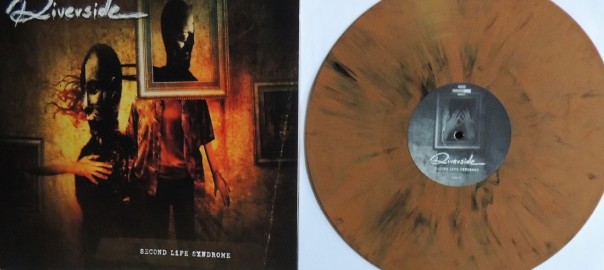
On October 31, 2005, a little-known progressive rock band from Poland released their second album. It was not a record that would ever sell a million copies nor would the band ever attain stadium-level fame (it was modern prog, after all…); nevertheless, their first album, released two years earlier, had caused a stir in the niche world of prog due to its fresh and original sound, and people were eager to see if this relatively new outfit could live up to that initial promise.
The band was Riverside; the album was Second Life Syndrome, and the niche world of prog sat up and took notice: now here was something truly extraordinary, an album of such sweeping vision and maturity it was hard to believe it was only their second full-length effort. Not only that, it was the album that literally put the band on the map: it marked the point at which they could routinely extend their tours beyond the borders of Poland into the rest of Europe, and even to the USA. It was the first real step in a career that has seen Riverside evolve from an unknown band from a musical backwater (relatively speaking) into Poland’s biggest musical export. It is a landmark album in their discography, and twenty years and six studio albums later it remains by far their most beloved.
Second Life Syndrome is the second album in what would become the Reality Dream Trilogy, which consisted of Out of Myself, Second Life Syndrome, and Rapid Eye Movement. The name was inspired by the “second album syndrome” that can happen to new bands (see the Fun Facts below), and Mariusz Duda, the band’s leader and songwriter, observed: “… when I realized that since the word ‘second’ was being used, there had to be a third…” And so the Trilogy was born.
What Makes It Great
Second Life Syndrome is the album that defines Riverside. Everything that gives the band its unique identity came together here. The original keyboard player had left, to be replaced by a very young Michał Łapaj, whose style was exactly the catalyst needed to pull the sound together. Mariusz Duda’s fine voice and powerful leading bass became the recognizable foundation, anchored by Łapaj’s sweeping keyboards and Piotr Kozieradski’s solid drumming. None of them are virtuosos (with the possible exception of Łapaj), but they don’t need to be. They are masters of lush synth-driven soundscapes and hauntingly beautiful melodies—but the most important aspect, what Duda and the guys value most of all, is emotional connection.
Which brings us to guitarist Piotr Grudziński.
Grudzień dominates Second Life Syndrome. His mastery of the riffs, the soaring solos, the pure emotion that he pours into his playing—his is the power that underpins the entire album, the motive force that drives it to the top of the Riverside discography. All of this is present in all the albums he appeared on, but Second Life Syndrome is where we heard it in its full glory, where we understood that you do not need flash and furious speed to be great, you need to feel the music. And Gru surely felt it.
This album demonstrates beyond all doubt that Riverside’s command of heavy prog is unassailable, and that they truly understand the meaning behind the word “progressive”. Beginning with a whispered-word intro that slides into a massive choral crescendo (“After”), it encompasses all the motifs: massive prog-metal stompers (“Volte-Face”, “Artificial Smile”), powerful near-ballads (“I Turned You Down”), majestic epics (“Dance With the Shadows”)—and through all of it Grudziński’s masterful guitar playing and Duda’s silky, distinctive voice.
Some of the band’s most enduring songs come from this album. “Conceiving You” is the key ballad, a beloved classic of their discography with its delicate piano intro, a majestic guitar solo, and heartbreakingly beautiful singing. It was the first song of theirs I ever heard, and after hearing it, there was no turning back.
Finally, there is that mighty title track, the quintessential Riverside song. This is an extraordinary piece of music, fifteen minutes of transportive glory, the apotheosis of Riverside’s two-decade-plus career. With its epic three-part structure and Grudziński’s iconic guitar solos, it showcases the band at its absolute best: unerring song-craft, an uncanny sense of power and emotion, hair-raising and immersive. It is an object lesson that every fledgling prog musician should heed—it exemplifies what modern prog could be and for the most part isn’t. The amazing thing is that this was not a one-off, or a happy accident: Mariusz Duda and crew repeated the magic (see also: “Left Out”, “Escalator Shrine”, the entirety of Memories in My Head).
The third album in the Trilogy was Rapid Eye Movement, which did not turn out as well as the band hoped; after that, Mariusz steered the band away from its original heavy progressive sound and into new waters. Their subsequent albums took inspiration from all over: full-on progressive metal, 70s classic rock, 80s synth-pop—but they always stayed moored to their roots: lush melodies, heavy driving riffs, thoughtful song-construction, anchored by Mariusz Duda’s wide-ranging vision and direction. They did grow and mature, and we can hear it in the music they gave us over the years, but the core of that sound coalesced and was fully realized on Second Life Syndrome. That album cemented the band’s place in the pantheon of modern prog giants and remains the epitome of what makes Riverside great. There is a reason it is the favourite of most Riverside fans, and even if it isn’t, I’d be willing to bet it is very close to the top.
Some Fun Facts:
- Piotr Grudziński was not fond of SLS, and he was surprised at how popular it became.
- There is no acoustic guitar, the only Riverside album where this is true. Mariusz did this intentionally because he wanted the album to be heavier and more raw than Out of Myself.
- SLS takes its name from the “second album syndrome” phenomenon that can plague new bands with very strong debut albums, where they struggle to live up to the quality and excitement of that initial release. Mariusz Duda was very much aware of this issue, especially since he fully intended to change the way the second album sounded—so he named it accordingly.
- Second Life Syndrome has a three-word title, and nine songs. So do Out of Myself and Rapid Eye Movement. They are part of a Trilogy, after all. Mariusz would continue using numerical patterns and symbolism, though in different ways, with all the rest of the Riverside albums.
- The album has an inverted structure, starting with a song called “After” and ending with a song called “Before.” It also contains an instrumental track and a title track. This structure would be mirrored a dozen years later on their seventh album, Wasteland.
- Three of the songs (Volte-Face, Second Life Syndrome, Dance With the Shadows) start in almost the same way, with a dark introductory drone, and this is a common trope across the Riverside discography (see also: The Same River, Beyond the Eyelids, Goodbye Sweet Innocence, Escalator Shrine, Age of Anger, and others).
- Mariusz does not create albums in isolation; they are almost always part of larger conceptual arcs, several albums united by a common theme and vision. This is true for the Riverside albums, and if you are familiar with Lunatic Soul and the electronica “musical world”, then you know that this holds true for those projects as well. The Reality Dream Trilogy was only the first.